
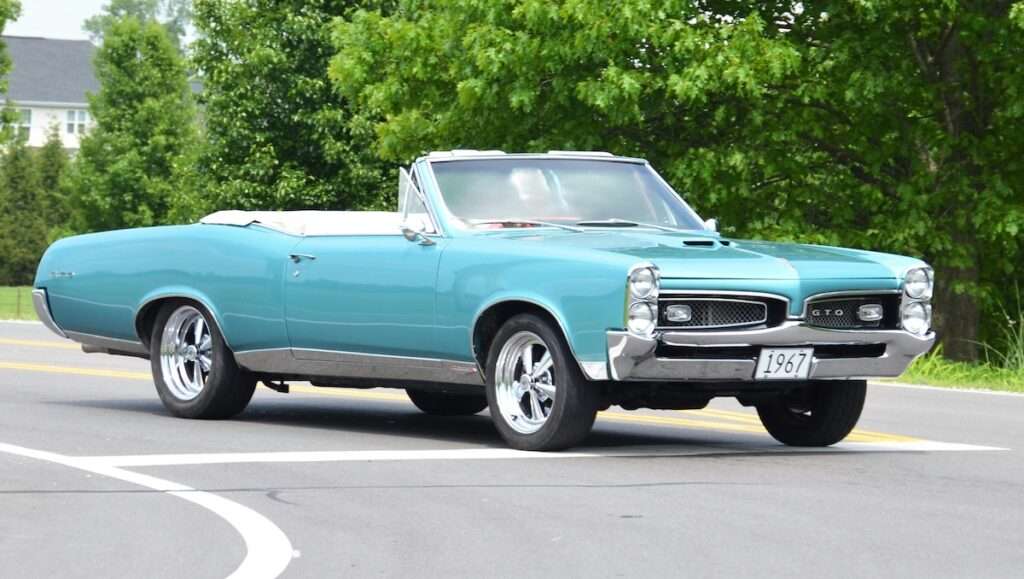
Your classic is not your daily driver, so a standard auto policy often does not fit it well. Here are straight answers to the questions we hear most from Pennsylvania collectors.
1. What counts as a “classic” car?
It depends on who you ask. Under Pennsylvania’s vehicle code, an antique is a car manufactured more than 25 years ago and kept in (or restored to) near-original condition. A “classic” is more than 10 years old and has to be approved by PennDOT as a model worth preserving. Insurers set their own rules too, so a car can qualify for one policy and not another.
2. Does my car need classic license plates to be insured as a classic?
Not always. Plates and insurance are separate things. Plates come from PennDOT, while insurers set their own eligibility rules, which typically look at the car’s age, condition, usage and storage. Some insurers do tie eligibility to special plates, so ask before you assume either way. If you do register with antique or classic plates, those plates come with use restrictions, so make sure your policy matches how you actually drive the car.
3. What’s the difference between agreed value and stated value?
This is the big one. Here is how the three valuation types compare:
| Actual Cash Value | Stated Value | Agreed Value | |
|---|---|---|---|
| Who sets the number | Insurer, after a loss | You declare it | You and the insurer, up front |
| Depreciation applied | Yes | Possibly | No |
| What you collect on a total loss | Depreciated market value | The lesser of your stated value or actual cash value | The agreed amount |
| Best for | Daily drivers | Be cautious | Classics and collectibles |
If your car is insured for $45,000 on a stated value policy, you can still be paid less than $45,000. Agreed value removes that guesswork.
4. Can I drive my classic to work?
Generally no. Classic car insurance policies are built for occasional pleasure driving, and most insurers expect you to have another vehicle for everyday use. Pennsylvania law backs this up: antique and classic plates cannot be used for general daily transportation, and you must keep regular registration on another vehicle.
5. How many miles can I drive each year?
Many classic policies cap mileage somewhere between 1,000 and 7,500 miles a year. Some limit use to shows, parades and club events. Some insurers offer flexible mileage options, so ask about this before you buy, especially if you like long weekend drives.
6. Does my car have to be in a garage?
Often, yes. Some insurers require a locked, fully enclosed structure, not a carport or a driveway. If you do not have a garage, ask about options before you sign up.
7. Will it cost more than my regular car insurance?
Usually less. National guides put typical classic policies at a few hundred dollars a year, roughly $200 to $900 depending on the car, coverage and driver. Insurify’s state data shows the same pattern. In Texas, for example, classic policies average $107 a month versus $157 for standard coverage. Lower mileage and secure storage are why. These are national and out-of-state figures, so your Pennsylvania quote will vary.
8. Can I just add it to my regular auto policy?
You can, but your payout would typically be based on actual cash value, which factors in depreciation. For a car that holds or gains value, that can leave a real gap.
9. What about a car I’m still restoring?
Coverage for cars under restoration varies by insurer. Ask directly, since a half-finished project is a different risk than a show-ready car.
10. What should I ask before I buy a policy?
Bring these questions to any quote:
- Is my payout based on agreed value or actual cash value?
- What are the mileage limits, and can I add miles?
- What are the storage requirements?
- Is there coverage for events, towing and roadside assistance?
- How is the value of my car established?
Get It Insured the Right Way
A classic car is part investment and part passion project. The right policy protects both. The Kind Insurance is an independent agency in Harrisburg that compares multiple carriers, so you are not stuck with one company’s rules. Reach out for a quote.